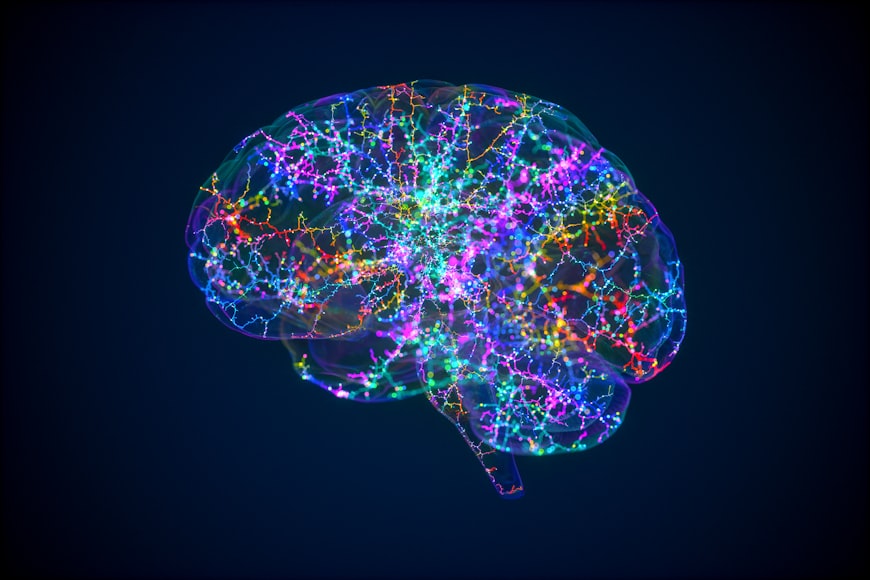
The way we learn is fundamentally shaped by how knowledge is presented. For centuries, education has been organized linearly—chapters, lessons, and textbooks that present information in a sequential, hierarchical structure. But knowledge itself is not linear. It is a web of interconnected ideas, where understanding one concept depends on understanding many others. Knowledge map learning apps are changing this paradigm by displaying topics as connected maps rather than isolated chapters, helping students see the full picture of subject relationships and encouraging curiosity through deeper, more connected understanding.
The shift is more than cosmetic. Research in cognitive science has consistently shown that the human brain organizes information in networks, not lists. We understand new information by connecting it to what we already know. When learning is presented in a linear format, students often struggle to see these connections, leading to fragmented knowledge that is difficult to apply in real-world contexts. Knowledge maps address this by making the connections visible and explicit.
Studies have shown that students who use concept mapping tools achieve 15 to 20 percent higher learning gains than those using traditional study methods. The global concept mapping software market is projected to reach $2.5 billion by 2028, growing at a compound annual growth rate of 17 percent. These numbers reflect a growing recognition that visual, connected learning is not just a preference—it is a more effective way to learn.
Inside This Analysis
- The Science of Connected Understanding: Why Knowledge Maps Work
- By the Numbers: The Case for Visual Learning
- Key Principles: How Knowledge Maps Enhance Learning
- Leading Knowledge Map Learning Apps
- The Benefits: From Fragmented to Connected Understanding
- Real-World Impact: Case Studies from Education and Business
- The Future: AI-Powered Knowledge Maps
The Science of Connected Understanding: Why Knowledge Maps Work
The effectiveness of knowledge maps is grounded in decades of cognitive science research. Several principles explain why visual, connected learning is more effective than traditional linear instruction.
Dual-Coding Theory: Proposed by Allan Paivio in the 1970s, dual-coding theory suggests that information is more easily retained when it is encoded both verbally and visually. Knowledge maps provide both modes of encoding—words on the map, and the visual structure of relationships. This dual encoding creates stronger, more durable memories.
Meaningful Learning Theory: Developed by David Ausubel, meaningful learning theory emphasizes that learning is most effective when new information is connected to existing knowledge. Knowledge maps make these connections explicit, helping students integrate new information into their existing mental models. Ausubel argued that "the most important single factor influencing learning is what the learner already knows"—and knowledge maps are designed to build on that existing knowledge.
Schemata Theory: Frederic Bartlett's schemata theory proposes that the mind organizes knowledge into mental frameworks or "schemata." Knowledge maps help students build and refine these schemata by making the structure of knowledge visible.
Gestalt Principles: The Gestalt principles of perception suggest that the mind naturally seeks to organize information into wholes rather than isolated parts. Knowledge maps align with this tendency by presenting knowledge as an integrated whole rather than a collection of isolated facts.
Research has found that students who use concept mapping tools achieve 15 to 20 percent higher learning gains compared to those using traditional study methods. The visual nature of maps helps students identify relationships, see patterns, and develop a deeper understanding of how concepts relate to each other.
By the Numbers: The Case for Visual Learning
The 15 to 20 percent higher learning gains are not marginal—they represent a significant improvement in educational outcomes. Students who use knowledge maps are more likely to understand complex concepts, apply knowledge in new contexts, and retain information over time.
The $2.5 billion market for concept mapping software by 2028 reflects the growing recognition of the value of visual learning. Schools, universities, and businesses are investing in these tools to improve learning outcomes and productivity. The 17 percent compound annual growth rate indicates that this is not a passing trend—it is a fundamental shift in how people learn.
The 65 percent of students who are visual learners highlights the importance of providing visual learning options. Traditional linear instruction is not effective for all students. Knowledge maps provide an alternative approach that can help visual learners succeed.
Research has shown that 90 percent of information transmitted to the brain is visual, and the brain processes visual information 60,000 times faster than text. This suggests that visual learning tools like knowledge maps are not just beneficial—they are aligned with how the brain is wired to process information.
Key Principles: How Knowledge Maps Enhance Learning
Knowledge maps are not just diagrams—they are powerful learning tools built on several key principles:
The combination of these principles creates a powerful learning experience. Students who use knowledge maps are not just memorizing facts—they are building a deep understanding of how knowledge is organized and how different ideas relate to each other.
When students create their own knowledge maps, they are engaging in a process of meaningful learning that is far more effective than passive reading. The act of deciding how to organize information, what connections to highlight, and what relationships to emphasize forces students to process and integrate information at a deep level.
The Bottom Line:
Knowledge maps transform learning from passive absorption to active construction. By making connections visible and explicit, they help students build the deep, integrated understanding that is essential for real-world application.
Leading Knowledge Map Learning Apps
Several knowledge map learning apps have emerged as leaders in the space:
Each of these apps takes a different approach to knowledge mapping, but they all share a common goal: helping students visualize and understand the connections between ideas. The variety means that students can find an app that matches their specific needs and learning style.
Many of these apps are cloud-based, allowing students to access their maps from any device. This is particularly valuable for group projects, where students need to collaborate on knowledge maps in real time. The collaboration features also enable teachers to provide feedback on student maps.
The Benefits: From Fragmented to Connected Understanding
These benefits combine to create a more effective and enjoyable learning experience. Students who use knowledge maps are not just learning facts—they are developing a deep, integrated understanding that they can apply to real-world situations.
The curiosity cultivation benefit is particularly significant. Traditional linear instruction often stifles curiosity by presenting information as a series of isolated facts. Knowledge maps, by contrast, reveal connections and patterns that encourage exploration. Students who see how ideas connect are more likely to ask questions and pursue independent learning.
Real-World Impact: Case Studies from Education and Business
Knowledge maps have been successfully applied in a wide range of educational and professional contexts. Several case studies highlight their transformative impact.
Medical Education: At the University of Virginia School of Medicine, students use concept maps to integrate knowledge across disciplines. The maps help students see connections between basic science and clinical practice, improving diagnostic reasoning. Studies have shown that medical students who use concept mapping demonstrate better clinical reasoning skills and are better prepared for patient care.
STEM Education: Research has found that students in STEM fields who use concept mapping achieve 15 to 20 percent higher learning gains than those using traditional methods. The visual nature of maps helps students understand complex mathematical and scientific concepts.
Corporate Training: Companies including IBM and Accenture have used concept mapping to train employees on complex systems and processes. The maps help employees understand how different parts of the organization work together, improving collaboration and productivity.
Knowledge Management: Organizations use knowledge maps to document and share knowledge across teams. The maps help capture tacit knowledge that might otherwise be lost when employees leave.
These case studies demonstrate that knowledge maps are not just a learning tool—they are a powerful way to organize and share knowledge in any context.
The Future: AI-Powered Knowledge Maps
The future of knowledge map learning apps is being shaped by artificial intelligence. AI is making knowledge maps more powerful, more personalized, and more accessible.
AI-Generated Maps: AI can analyze text and automatically generate knowledge maps. This is particularly valuable for students who are learning new subjects, as it provides a visual overview of the subject matter.
Personalized Mapping: AI can personalize knowledge maps based on student learning history and preferences. Students can see connections that are most relevant to their current learning goals.
Interactive Maps: AI-powered knowledge maps are becoming interactive. Students can click on nodes to explore deeper, ask questions, and receive explanations.
Adaptive Learning: AI can adapt knowledge maps based on student progress. As students master concepts, the map can expand to include more advanced topics.
Natural Language Processing: Students can interact with maps through natural language, asking questions and receiving explanations in a conversational format.
Integration with Learning Platforms: Knowledge maps are being integrated with learning platforms, providing students with a visual representation of their learning journey.
The AI-powered future of knowledge maps holds significant promise. As the technology continues to improve, knowledge maps will become even more effective learning tools.
Stay Informed About EdTech Apps
Subscribe to our weekly newsletter for the latest updates on knowledge map apps, visual learning, and the tools transforming education delivered directly to your inbox.
Subscribe Now